Comorbidities
"The presence of one or more additional conditions often co-occurring with a primary condition". I am focusing on comorbidities I have been diagnosed with, but there are many more that other EDSers experience.
Postural Orthostatic Tachycardia Syndrome & Dysautonomia
"Dysautonomia refers to a group of medical conditions caused by problems with the autonomic nervous system (ANS). This part of your nervous system controls involuntary body functions like your heartbeat, breathing and digestion. When the ANS doesn’t work as it should, it can cause heart and blood pressure problems, trouble breathing and loss of bladder control." (Cleveland Clinic). POTS is one of the many conditions within the Dysautonomia label. To learn more about Dysautonomia itself, please refer to this article.
(Photo credit to Life With Pots)
With POTS, your body can't coordinate the balancing act of blood vessels (made of connective tissues!) squeezing and your heart rate response which regulates blood pressure. It mostly affects you when you are standing or transitioning from sitting to standing. Symptoms include:
-
Dizziness, lightheadedness especially when standing
-
Fainting
-
Brain fog
-
Heart palpitations
-
Chest pain
-
Fatigue
-
Anxiety
-
Shortness of breath
-
Headaches
-
Nausea/vomiting
-
Bloating
-
Insomnia, night sweating, and other sleep disruptions
-
Pale face and discolored hands and feet if they are lower than the level of your heart
POTS symptoms often get worse in the following situations:
-
Being in warm environments
-
Standing frequently (eg waiting in line, shopping)
-
Participating in strenuous exercise.
-
During illness (colds/infections)
-
Menstruation
POTS is treated with gentle aerobic exercise, nutrition (including more electrolytes, particularly sodium), and certain medications. Staying hydrated, taking frequent short breaks, and not pushing your limits is extremely important with POTS.


Fibromyalgia
"Fibromyalgia is a disorder characterized by widespread musculoskeletal pain accompanied by fatigue, sleep, memory, and mood issues. Researchers believe that fibromyalgia amplifies painful sensations by affecting the way your brain and spinal cord process painful and nonpainful signals." (Mayo Clinic). A friend from a support group who also has fibromyalgia once described it as "having a fried nervous system", and that was the best description I've ever heard! Symptoms include:
-
Widespread pain
-
Fatigue
-
Brain fog/cognitive dysfunctions
-
Involuntary muscle spasms, twitching
Many comorbidities to Fibromyalgia itself exist, such as irritable bowel syndrome, chronic fatigue syndrome, and interstitial cystitis. Talk about comorbidities to a comorbidity!

Gastroparesis
Normally, strong muscular contractions propel food through our digestive tracts. But with this condition, our stomach's movement is slowed down or does not contract at all, so the stomach does not empty properly. Symptoms include:
-
Vomiting
-
Nausea
-
Abdominal bloating
-
Abdominal pain
-
A feeling of fullness after eating just a few bites
-
Vomiting undigested food eaten a few hours earlier
-
Acid reflux
-
Changes in blood sugar levels
-
Lack of appetite
-
Weight loss and malnutrition
There is no cure, but diet and certain medications can help gastroparesis. I have seen many EDSers have to get feeding tubes and colostomy bags as a direct or indirect result of gastroparesis. Luckily, many brands on Etsy make adorable tube tape and bag covers so you can find both relief and style!

Reynaud's Disease
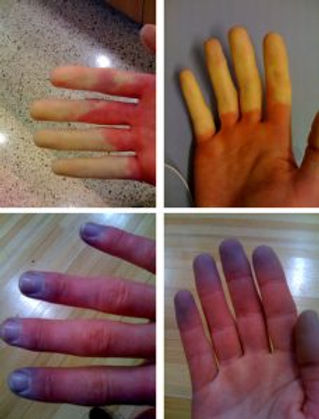
This disease causes some areas of the body, like fingers and toes, to feel numb and cold in response to stress or cold temperatures. The smaller arteries (composed of connective tissues-- see a pattern here?) that supply blood to the skin narrow and limit blood flow to the affected areas. This results in ice-cold white, purple, or blue fingers. The area will often feel prickly or stinging pain and swell once warmed or the stress is relieved. (Photo credit.)
Arthritis
Early-onset arthritis is when joint disease strikes earlier in life than typically expected. Like arthritis, early-onset arthritis can come in many forms. Osteoarthritis is associated with the wear and tear of joints, while others are autoimmune diseases. Symptoms vary depending on the type of arthritis, but common symptoms include:
-
Stiffness, aching, and tenderness in joints
-
Pain with movement
-
Pain spreading to joints over time
-
Fatigue
-
Depression
-
Low-grade fever
-
Swelling around joint
-
clicking or cracking when the joint bends
-
Muscle weakness around joint
-
Unstable joint (knee giving out)
Treatments include physical and occupational therapy, medications, surgery, and lifestyle changes.

Others
There are many other common comorbidities with EDS that if we don't begin with them, we eventually experience at least once. I highly suggest reading this article for a comprehensive list of comorbidities as there are far too many to list!
For example, I also experience these comorbidities:
-
Immunocompromisation (weak immune system)
-
Chronic sinusitis and respiratory infections
-
-
Scoliosis
-
B12 and Iron Anemia
-
Autism
-
GERD (Gastroesophageal reflux disease)
-
Food and drug allergies/sensitivities
-
-
PCOS
-
Incontinence
But many more exist for other EDSers, including but not limited to:
-
Aneurysms
-
Endometriosis and hormonal disorders
-
Seizure disorders, epilepsy
-
CSF leaks
-
MCAS (Mast Cell Activation Syndrome)
-
Mast cells are part of your immune system. When people are exposed to allergens (food, medicine, venom) that they're allergic to, mast cells react and release chemical mediators creating the symptoms of an allergic reaction (itching, mucus, inflammation).
-
With MCAS, your mast cells release these mediators too frequently on their own without any allergen they are responding to
-
-
MS (Multiple-sclerosis)
-
Potentially disabling disease of the brain and spinal cord (central nervous system)
-
"In MS, the immune system attacks the protective sheath (myelin) that covers nerve fibers and causes communication problems between your brain and the rest of your body. Eventually, the disease can cause permanent damage or deterioration of the nerve fibers."(Mayo Clinic)
-